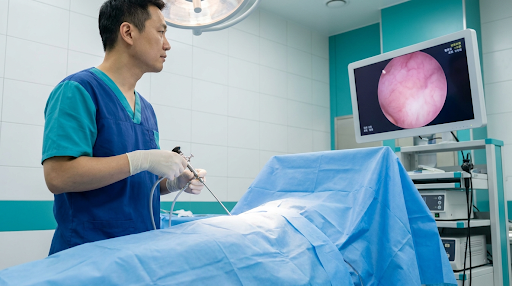
Most patients undergoing a flexible cystoscopy experience brief pressure or discomfort rather than severe pain. Local anaesthetic gel is used to numb and lubricate the urethra, and the procedure itself is usually brief.
A cystoscopy allows a urologist to look inside the urethra and bladder using a thin instrument with a camera. Knowing what to expect during and after a cystoscopy can help you feel more prepared and less uncertain about the procedure.
What Is a Cystoscopy?
A cystoscopy is a procedure that allows a urologist to examine the inside of the urethra and bladder using a thin instrument called a cystoscope. The cystoscope is passed through the urethra and into the bladder so that the lining can be viewed directly.
It may be recommended when a closer examination of the urinary tract is needed, including when investigating blood in the urine or persistent urinary symptoms.
There are flexible and rigid types of cystoscopy. A flexible cystoscopy is commonly performed while you are awake using local anaesthetic gel. A rigid cystoscopy generally involves spinal or general anaesthesia, particularly when a biopsy or treatment is required.
What Does a Cystoscopy Feel Like?
The sensations during a flexible cystoscopy usually change as the cystoscope moves through the urethra and into the bladder. They are most noticeable at a few specific stages of the procedure:
- When the anaesthetic gel is applied: A cool or mildly stinging sensation can occur as the gel is introduced into the urethra. The gel helps numb and lubricate the area before the cystoscope is inserted.
- As the cystoscope passes through the urethra: Brief pressure, stretching or discomfort may be felt as the scope moves towards the bladder.
- When the bladder is filled: Sterile fluid is introduced so the bladder lining can be examined clearly. This creates a sense of bladder fullness.
- During the bladder examination: The increased fullness can trigger a strong but temporary urge to urinate.
These sensations are usually brief and ease once the cystoscope is removed and the bladder is emptied.
How Long Does a Cystoscopy Take?
A straightforward flexible cystoscopy usually takes about 5–10 minutes, although the exact duration can vary depending on what needs to be examined.
The overall appointment will take longer to allow for preparation before the cystoscopy and discussion of the findings afterwards. If a biopsy or treatment is needed during the cystoscopy, the procedure may also take longer.
What Can Cause Cystoscopy Discomfort?
The experience can vary from one patient to another. Factors such as the condition of the urethra, anxiety before the procedure, and whether any additional procedures are needed can affect how the cystoscopy feels.
Urethral Narrowing or Irritation
Narrowing of the urethra, known as a urethral stricture, can make it more difficult for the cystoscope to pass through and may increase discomfort. Inflammation or irritation of the urinary tract can also make the area more sensitive during the procedure.
Anxiety
Feeling anxious before an invasive procedure is common and can influence how pain or other sensations are experienced. If you are particularly worried or have previously found catheterisation or another urinary procedure painful, tell your urologist before the cystoscopy.
Additional Procedures
If a biopsy or treatment is performed during the cystoscopy, this can affect the level of discomfort experienced. These additional procedures may require a different form of anaesthesia and can also result in a longer procedure or recovery.
How Should You Prepare for a Cystoscopy?
Preparation depends on the type of cystoscopy and the anaesthesia used. A routine flexible cystoscopy under local anaesthetic usually requires less preparation than a rigid cystoscopy performed under spinal or general anaesthesia.
Before your cystoscopy:
- Follow your clinic’s instructions about medications, eating and drinking.
- Tell your urologist if you are taking blood-thinning medication.
- Inform the clinic if you have symptoms of a urinary tract infection.
- Mention any previous urethral procedures or difficulties with catheterisation.
- Let the clinical team know if you are particularly anxious about the procedure.
Fasting is usually not required for a routine flexible cystoscopy under local anaesthetic. Different instructions may apply if you are having a rigid cystoscopy under spinal or general anaesthesia.
Your clinic will advise you on the specific preparation required based on the type of cystoscopy planned.
Does It Hurt After a Cystoscopy?
Mild burning or stinging when passing urine can occur after a cystoscopy. A small amount of blood in the urine or a temporary increase in urinary frequency may also occur. These symptoms usually improve within one to two days.
Follow the aftercare instructions provided by your clinic. Drinking sufficient fluids may be recommended unless you have been advised to restrict your fluid intake.
Contact your clinic promptly if you experience:
- Inability to pass urine
- Persistent bright red blood or blood clots in the urine
- Fever or chills
- Severe or worsening pain
- Painful urination that lasts for more than two days
These symptoms are not part of the usual short-term recovery after a straightforward flexible cystoscopy and should be reviewed by your doctor.
Frequently Asked Questions
Is Cystoscopy Painful for Men?
Most men undergoing a flexible cystoscopy experience temporary pressure or discomfort rather than severe pain. Local anaesthetic gel is used to numb and lubricate the urethra before the cystoscope is inserted.
Will I Be Awake During a Cystoscopy?
You will usually be awake during a flexible cystoscopy because local anaesthetic gel is commonly used. For a rigid cystoscopy, spinal or general anaesthesia may be used, so whether you remain awake depends on the type of anaesthesia given.
Is Anaesthetic Used for Cystoscopy?
Yes. Local anaesthetic gel is commonly used for a flexible cystoscopy. Spinal or general anaesthesia may be used for a rigid cystoscopy, particularly when a biopsy or treatment is required.
How Long Does Burning Last After a Cystoscopy?
Mild burning or stinging when passing urine usually improves within one to two days. Contact your clinic if painful urination lasts longer than two days, becomes more severe, or is accompanied by fever or difficulty passing urine.
Can I Return to Work After a Cystoscopy?
Most patients can return to their usual activities after a straightforward flexible cystoscopy once they feel comfortable. Additional recovery time may be needed if a biopsy or treatment is performed, or if spinal or general anaesthesia is used.
What If I Am Very Anxious About Having a Cystoscopy?
Tell your urologist or clinical team before the procedure. They can explain what to expect, discuss the anaesthesia being used and address any concerns you have beforehand.
Understanding Cystoscopy Pain
A flexible cystoscopy is usually brief, and most patients experience temporary pressure or mild discomfort rather than severe pain. Mild burning or stinging when passing urine afterwards usually improves within one to two days.
If you are considering or preparing for a cystoscopy in Singapore, discuss any concerns about pain, anaesthesia or recovery with your urologist beforehand.